
AA228V/CS238V
Validation of Safety-Critical Systems
Validation of Safety-Critical Systems
Lecture 10: Failure Probability Estimation
Sydney Katz (smkatz@stanford.edu)
Sydney Katz (smkatz@stanford.edu)
What is the probability of failure?
pfail=Eτ∼p(⋅)[1{τ∈/ψ}]
pfail=Eτ∼p(⋅)[1{τ∈/ψ}]
pfail=∫1{τ∈/ψ}p(τ)dτ
Failure Probability
Failure Distribution
pfail=∫1{τ∈/ψ}p(τ)dτ
p(τ∣τ∈/ψ)=
1{τ∈/ψ}p(τ)
∫1{τ∈/ψ}p(τ)dτ
The probability of failure is the normalizing constant of the failure distribution!
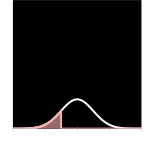
The probability of failure is the normalizing constant of the failure distribution!
pfail=∫1{τ∈/ψ}p(τ)dτ
Earlier, we noted that this normalizing constant is generally intractable to compute exactly.
In this lecture, we will discuss ways to estimate it.
In this lecture, we will discuss ways to estimate it.
Plan for Today
Part 1
Part 2
Part 3
1
1
Direct Estimation
2
Importance Sampling
3
Cross Entropy Method (Adaptive Importance Sampling)
4
Multiple Importance Sampling
5
Population Monte Carlo
6
Sequential Monte Carlo
7
Ratio of Normalizing Constants
8
Self-Normalized Importance Sampling
9
Bridge Sampling
10
Multilevel Splitting
This is what I would start with for Project 2!
Direct Estimation
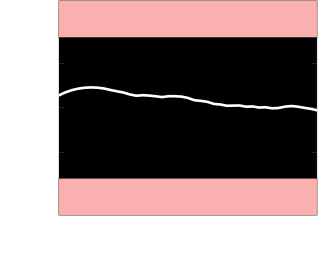
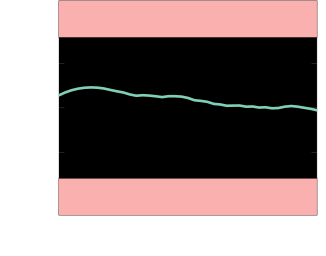
1
Perform a rollout of the system
2
Label outcome as 1 if the trajectory is a failure and 0 otherwise
Direct Estimation
1
Perform a rollout of the system
2
Label outcome as 1 if the trajectory is a failure and 0 otherwise
This process is equivalent to producing samples from a Bernoulli distribution defined by parameter pfail.
We can use the parameter estimation techniques from chapter 2 to estimate it!
(maximum likelihood estimation or Bayesian estimation)
Direct Estimation
maximum likelihood estimator
p^fail=m1i=1∑m1{τi∈/ψ}=mn
number of failure trajectories
total number of trajectories
Quick Aside: How do we assess how good an estimator is?
Quick Aside: How do we assess how good an estimator is?
Bias
Consistency
Variance
Quick Aside: How do we assess how good an estimator is?
Bias
Consistency
Variance
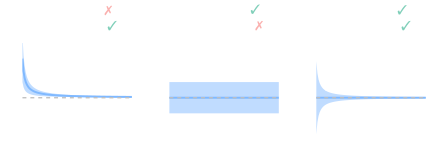
An estimator is unbiased if it
predicts the true value in
expectation:
predicts the true value in
expectation:
E[p^fail]=pfail
An estimator is consistent if it
converges to the true value in
the limit of infinite samples:
converges to the true value in
the limit of infinite samples:
m→∞limp^fail=pfail
The variance of an estimator
quantifies the spread of the
estimates around the true value.
quantifies the spread of the
estimates around the true value.
Direct Estimation
maximum likelihood estimator
p^fail=m1i=1∑m1{τi∈/ψ}=mn
number of failure trajectories
total number of trajectories
Direct Estimation
maximum likelihood estimator
p^fail=m1i=1∑m1{τi∈/ψ}=mn
Unbiased
Var[p^fail]=mpfail(1−pfail)
What happens to the variance as m→∞?
Consistent
Direct Estimation
maximum likelihood estimator
p^fail=m1i=1∑m1{τi∈/ψ}=mn
Unbiased
Consistent
Var[p^fail]=mpfail(1−pfail)
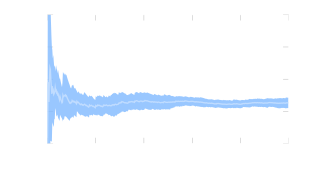
1
As the number of samples increases, the variance in the estimate decreases.
Direct Estimation
maximum likelihood estimator
p^fail=m1i=1∑m1{τi∈/ψ}=mn
Unbiased
Consistent
Var[p^fail]=mpfail(1−pfail)
1
As the number of samples increases, the variance in the estimate decreases.
2
As the probability of failure decreases, the variance in the estimate increases.
Again, bad news for systems with rare failure events.
We will discuss importance sampling techniques
throughout the rest of this lecture that aim to
address this issue!
throughout the rest of this lecture that aim to
address this issue!
Direct Estimation
But first: one more issue with maximum likelihood estimation.

Imagine that we want to estimate the probability of failure for an aircraft collision avoidance system
from an aviation safety database that contains flight records from the month of December.
What would the maximum likelihood estimate of the probability of failure be if there were no
recorded midair collisions in December?
from an aviation safety database that contains flight records from the month of December.
What would the maximum likelihood estimate of the probability of failure be if there were no
recorded midair collisions in December?
Zero!
We could use Bayesian estimation in this case to produce a distribution over the probability of failure.
Direct Estimation
We could use Bayesian estimation in this case to produce a distribution over the probability of failure.
Remember these fun times?
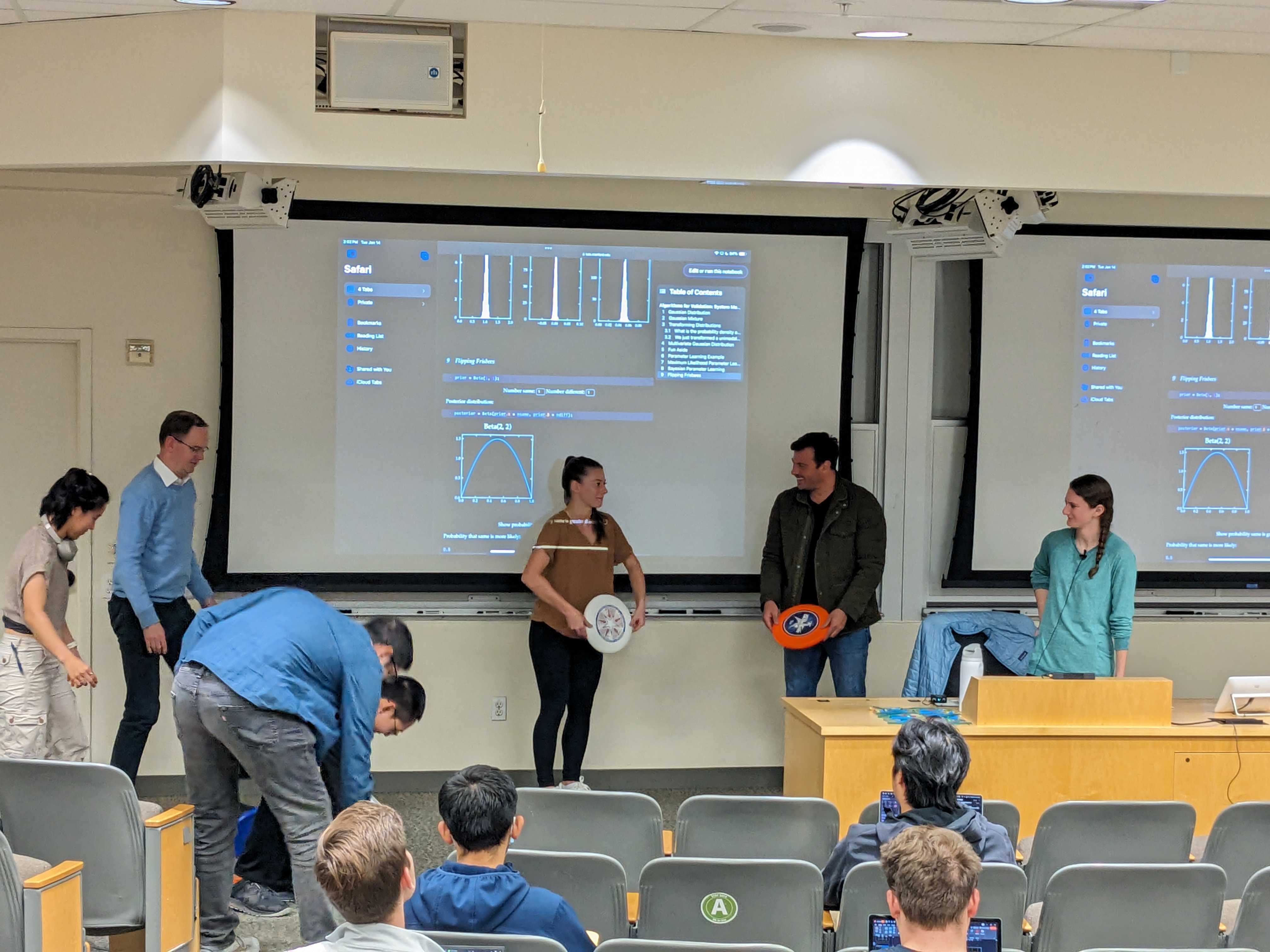
Direct Estimation
We could use Bayesian estimation in this case to produce a distribution over the probability of failure.
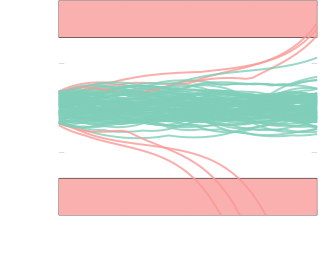
Remember these fun times?
p(θ∣D)=∫θp(D∣θ)p(θ)dθp(D∣θ)p(θ)
p(θ)=Beta(θ∣α,β)
p(θ∣D)=Beta(θ∣α+n,β+m−n)
θ
: probability of both frisbees landing in the same direction
n
: number of times same
m
: total number of flips
Direct Estimation
We could use Bayesian estimation in this case to produce a distribution over the probability of failure.
Remember these fun times?
p(θ∣D)=∫θp(D∣θ)p(θ)dθp(D∣θ)p(θ)
p(θ)=Beta(θ∣α,β)
p(θ∣D)=Beta(θ∣α+n,β+m−n)
θ
: probability of both frisbees landing in the same direction
n
: number of times same
m
: total number of flips
Direct Estimation
We could use Bayesian estimation in this case to produce a distribution over the probability of failure.
Remember these fun times?
p(θ∣D)=∫θp(D∣θ)p(θ)dθp(D∣θ)p(θ)
p(θ)=Beta(θ∣α,β)
p(θ∣D)=Beta(θ∣α+n,β+m−n)
θ
: probability of both frisbees landing in the same direction
: pfail
n
: number of times same
m
: total number of flips
Direct Estimation
We could use Bayesian estimation in this case to produce a distribution over the probability of failure.
Remember these fun times?
p(θ∣D)=∫θp(D∣θ)p(θ)dθp(D∣θ)p(θ)
p(θ)=Beta(θ∣α,β)
p(θ∣D)=Beta(θ∣α+n,β+m−n)
θ
: probability of both frisbees landing in the same direction
: pfail
n
: number of times same
: number of failure trajectories
m
: total number of flips
Direct Estimation
We could use Bayesian estimation in this case to produce a distribution over the probability of failure.
Remember these fun times?
p(θ∣D)=∫θp(D∣θ)p(θ)dθp(D∣θ)p(θ)
p(θ)=Beta(θ∣α,β)
p(θ∣D)=Beta(θ∣α+n,β+m−n)
θ
: probability of both frisbees landing in the same direction
: pfail
n
: number of times same
: number of failure trajectories
m
: total number of flips
: total number of trajectories
Direct Estimation
Perception noise σ0.25
Number of rollouts m50
Zoom θmax1.00
Zoom ymax15
Direct Estimation
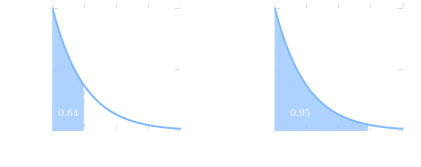
A cool thing about Bayesian estimation is that is allows us to quantify the confidence we have in our estimate.
Plan for Today
Part 1
Part 2
Part 3
1
Direct Estimation
2
Importance Sampling
3
Cross Entropy Method (Adaptive Importance Sampling)
4
Multiple Importance Sampling
5
Population Monte Carlo
6
Sequential Monte Carlo
7
Ratio of Normalizing Constants
8
Self-Normalized Importance Sampling
9
Bridge Sampling
10
Multilevel Splitting
This is what I would start with for Project 2!
Direct Estimation
Importance Sampling
1
Draw samples from the nominal trajectory distribution.
2
Estimate the probability of failure by dividing the number of failure samples by the total number of samples.
What might be a problem with this method?
Hint: what theme seems to be coming up over and over again in this course?
Hint: what theme seems to be coming up over and over again in this course?
It will be inefficient for systems with rare failure events!
1
Draw samples from a proposal distribution that is more likely to produce failure trajectories.
2
Estimate the probability of failure by reweighing the samples.
Importance Sampling
1
Draw samples from a proposal distribution that is more likely to produce failure trajectories.
2
Estimate the probability of failure by reweighing the samples.
Importance Sampling
1
Draw samples from a proposal distribution that is more likely to produce failure trajectories.
2
Estimate the probability of failure by reweighing the samples.
τ∼q(⋅)
p^fail=m1i=1∑mq(τi)p(τi)1{τi∈/ψ}
=m1i=1∑mwi1{τi∈/ψ}
wi=q(τi)p(τi)
This estimator is both unbiased and consistent.
Direct Estimation
Importance Sampling
1
Draw samples from p(⋅)
2
Estimate the probability of failure:
p^fail=m1i=1∑m1{τi∈/ψ}
1
Draw samples from q(⋅)
2
Estimate the probability of failure:
p^fail=m1i=1∑mwi1{τi∈/ψ}
wi=q(τi)p(τi)
importance
weight
weight
Samples that are more likely under the nominal trajectory distribution will have a higher importance weight.
Importance Sampling
1
Draw samples from q(⋅)
2
Estimate the probability of failure:
p^fail=m1i=1∑mwi1{τi∈/ψ}
wi=q(τi)p(τi)
importance
weight
weight
Importance Sampling
1
Draw samples from q(⋅)
2
Estimate the probability of failure:
p^fail=m1i=1∑mwi1{τi∈/ψ}
wi=q(τi)p(τi)
importance
weight
weight
Importance Sampling
1
Draw samples from q(⋅)
2
Estimate the probability of failure:
p^fail=m1i=1∑mwi1{τi∈/ψ}
wi=q(τi)p(τi)
importance
weight
weight
Importance Sampling
Samples500
Threshold γ-2.00
Proposal μ0.0
Proposal σ1.0
Error ymax0.050
We want the proposal distribution
to sample likely failures more often
than unlikely failures or successes.
to sample likely failures more often
than unlikely failures or successes.
Is there an optimal proposal distribution?
Importance Sampling
Is there an optimal proposal distribution?
We will define the optimal proposal
distribution as the one that minimizes the
variance of the estimator:
distribution as the one that minimizes the
variance of the estimator:
Var[p^fail]=m1Eτ∼q(⋅)[q(τ)(p(τ)1{τ∈/ψ}−q(τ)pfail)2]
Importance Sampling
Is there an optimal proposal distribution?
We will define the optimal proposal
distribution as the one that minimizes the
variance of the estimator:
distribution as the one that minimizes the
variance of the estimator:
Var[p^fail]=m1Eτ∼q(⋅)[q(τ)(p(τ)1{τ∈/ψ}−q(τ)pfail)2]
q∗(τ)=pfailp(τ)1{τ∈/ψ}
Does this distribution look familiar?
It’s the failure distribution!
🤔…but it is written in terms of the
thing we want to estimate (pfail).
thing we want to estimate (pfail).
Importance Sampling
q∗(τ)=pfailp(τ)1{τ∈/ψ}
Does this distribution look familiar?
It’s the failure distribution!
🤔…but it is written in terms of the
thing we want to estimate (pfail).
thing we want to estimate (pfail).

Importance Sampling
q∗(τ)=pfailp(τ)1{τ∈/ψ}
Does this distribution look familiar?
It’s the failure distribution!
🤔…but it is written in terms of the
thing we want to estimate (pfail).
thing we want to estimate (pfail).
Best we can do is select a proposal that is as close
as possible to the failure distribution.
as possible to the failure distribution.
Note: we must be able to sample from
and compute the (normalized) density of
the proposal distribution we choose.
and compute the (normalized) density of
the proposal distribution we choose.
Various importance sampling algorithms have different ways of selecting this proposal.
One option: hand design based on domain knowledge.
Perhapsyourfuzzingdistribution?Hint,hint:project2.
Various importance sampling algorithms have different ways of selecting this proposal.
Another option: fit a proposal distribution to samples from the failure distribution.
Various importance sampling algorithms have different ways of selecting this proposal.
Another option: fit a proposal distribution to samples from the failure distribution.
Failure if τ<−2 · MCMC samples from the failure distribution → fit a Gaussian proposal
Various importance sampling algorithms have different ways of selecting this proposal.
Another option: fit a proposal distribution to samples from the failure distribution.
Challenges
1
Producing samples from the failure distribution is a nontrivial task
(as we saw in the failure distribution lecture).
(as we saw in the failure distribution lecture).
2
It may be difficult to produce a good fit to samples from the failure
distribution for high-dimensional systems with multiple failure modes.
distribution for high-dimensional systems with multiple failure modes.
Various importance sampling algorithms have different ways of selecting this proposal.
Another option: fit a proposal distribution to samples from the failure distribution.
Challenges
1
Producing samples from the failure distribution is a nontrivial task
(as we saw in the failure distribution lecture).
(as we saw in the failure distribution lecture).

What if we could still fit a good proposal using samples from
a different distribution that is easier to sample from?
a different distribution that is easier to sample from?
2
It may be difficult to produce a good fit to samples from the failure
distribution for high-dimensional systems with multiple failure modes.
distribution for high-dimensional systems with multiple failure modes.
Plan for Today
Part 1
Part 2
Part 3
1
Direct Estimation
2
Importance Sampling
3
Cross Entropy Method (Adaptive Importance Sampling)
4
Multiple Importance Sampling
5
Population Monte Carlo
6
Sequential Monte Carlo
7
Ratio of Normalizing Constants
8
Self-Normalized Importance Sampling
9
Bridge Sampling
10
Multilevel Splitting
Cross Entropy Method
What if we could still fit a good proposal using samples from
a different distribution that is easier to sample from?
a different distribution that is easier to sample from?
1
Draw samples from an initial proposal distribution that is easy sample from.
2
Use the samples to fit a new proposal distribution from a model class that we also know how
to sample from by selecting the parameters that minimize the cross entropy between the
proposal distribution and the failure distribution.
to sample from by selecting the parameters that minimize the cross entropy between the
proposal distribution and the failure distribution.
Cross Entropy Method
What if we could still fit a good proposal using samples from
a different distribution that is easier to sample from?
a different distribution that is easier to sample from?
1
Draw samples from an initial proposal distribution that is easy sample from.
τ∼q(⋅)
What proposal distribution should we try?
How about the nominal trajectory distribution?
2
Use the samples to fit a new proposal distribution from a model class that we also know how
to sample from by selecting the parameters that minimize the cross entropy between the
proposal distribution and the failure distribution.
to sample from by selecting the parameters that minimize the cross entropy between the
proposal distribution and the failure distribution.
For many common model classes (e.g. Gaussian), minimizing the cross entropy is equivalent
to computing the weighted maximum likelihood estimate for the parameters with weights
to computing the weighted maximum likelihood estimate for the parameters with weights
w=q(τ)p(τ)1{τ∈/ψ}
Cross Entropy Method
If we sample from the nominal distribution and failures are rare,
we may not get any failures and all the weights will be zero!
we may not get any failures and all the weights will be zero!
Samples500
Threshold γ-2.00
Cross Entropy Method
If we sample from the nominal distribution and failures are rare,
we may not get any failures and all the weights will be zero!
we may not get any failures and all the weights will be zero!
Samples500
Threshold γ-2.00

Start with the nominal distribution
and iteratively adapt it to move closer
to the failure distribution.
and iteratively adapt it to move closer
to the failure distribution.
The adaptive part of adaptive importance sampling!
Cross Entropy Method
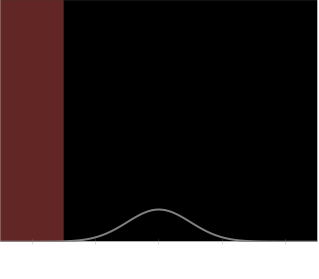
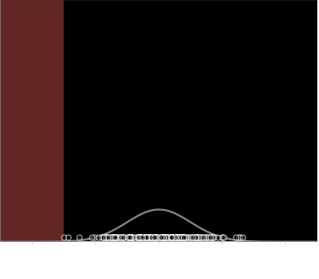
Before we start:
1
Pick an initial proposal to adapt
(e.g. nominal trajectory distribution)
(e.g. nominal trajectory distribution)
2
Pick a notion of closeness to failure f(τ)
(e.g. robustness)
(e.g. robustness)
We will require that f(τ)≤0 for
failure trajectories such that
p(τ∣τ∈/ψ)=p(τ∣f(τ)≤0)
failure trajectories such that
p(τ∣τ∈/ψ)=p(τ∣f(τ)≤0)
Cross Entropy Method
Before we start:
1
Pick an initial proposal to adapt
(e.g. nominal trajectory distribution)
(e.g. nominal trajectory distribution)
2
Pick a notion of closeness to failure f(τ)
(e.g. robustness)
(e.g. robustness)
We will require that f(τ)≤0 for
failure trajectories such that
p(τ∣τ∈/ψ)=p(τ∣f(τ)≤0)
failure trajectories such that
p(τ∣τ∈/ψ)=p(τ∣f(τ)≤0)
f(τ)≤0
Ideally, we minimize the cross entropy between the
new proposal distribution and p(τ∣f(τ)≤0).
new proposal distribution and p(τ∣f(τ)≤0).
Cross Entropy Method
Before we start:
1
Pick an initial proposal to adapt
(e.g. nominal trajectory distribution)
(e.g. nominal trajectory distribution)
2
Pick a notion of closeness to failure f(τ)
(e.g. robustness)
(e.g. robustness)
We will require that f(τ)≤0 for
failure trajectories such that
p(τ∣τ∈/ψ)=p(τ∣f(τ)≤0)
failure trajectories such that
p(τ∣τ∈/ψ)=p(τ∣f(τ)≤0)
f(τ)≤0
Ideally, we minimize the cross entropy between the
new proposal distribution and p(τ∣f(τ)≤0).
new proposal distribution and p(τ∣f(τ)≤0).
…but the weights might all be zero!
Cross Entropy Method
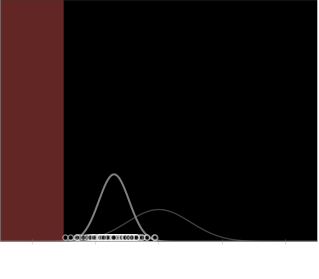
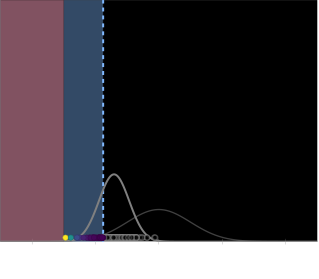
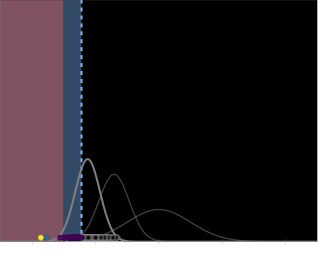
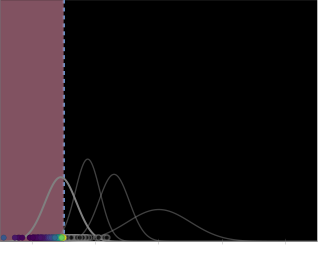
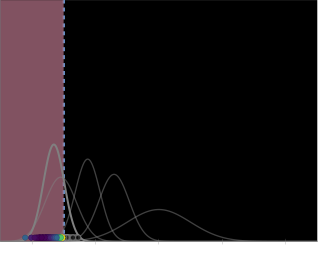
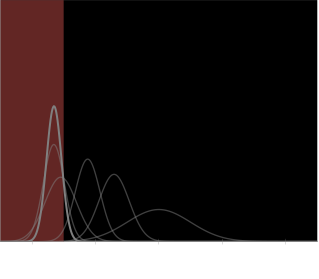
At each iteration
1
Draw samples from the current proposal.
2
Compute f(τ) for each sample and pick
the top melite samples.
the top melite samples.
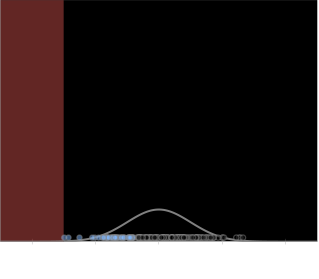
f(τ)≤0
Ideally, we minimize the cross entropy between the
new proposal distribution and p(τ∣f(τ)≤0).
new proposal distribution and p(τ∣f(τ)≤0).
…but the weights might all be zero!
Cross Entropy Method
At each iteration
1
Draw samples from the current proposal.
2
Compute f(τ) for each sample and pick
the top melite samples.
the top melite samples.
3
Select the threshold γ to be the highest
f(τ) of the elite samples.
f(τ) of the elite samples.
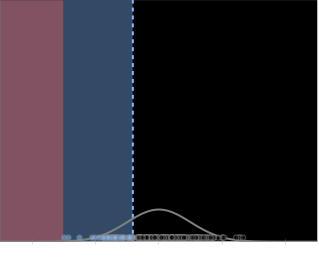
f(τ)≤0
Ideally, we minimize the cross entropy between the
new proposal distribution and p(τ∣f(τ)≤0).
new proposal distribution and p(τ∣f(τ)≤0).
…but the weights might all be zero!
Cross Entropy Method
At each iteration
1
Draw samples from the current proposal.
2
Compute f(τ) for each sample and pick
the top melite samples.
the top melite samples.
3
Select the threshold γ to be the highest
f(τ) of the elite samples.
f(τ) of the elite samples.
4
Compute the next proposal by minimizing
the cross entropy with p(τ∣f(τ)≤γ).
the cross entropy with p(τ∣f(τ)≤γ).
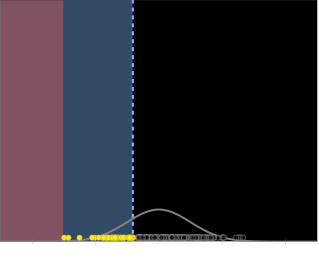
f(τ)≤0
Ideally, we minimize the cross entropy between the
new proposal distribution and p(τ∣f(τ)≤0).
new proposal distribution and p(τ∣f(τ)≤0).
…but the weights might all be zero!
Cross Entropy Method
At each iteration
1
Draw samples from the current proposal.
2
Compute f(τ) for each sample and pick
the top melite samples.
the top melite samples.
3
Select the threshold γ to be the highest
f(τ) of the elite samples.
f(τ) of the elite samples.
4
Compute the next proposal by minimizing
the cross entropy with p(τ∣f(τ)≤γ).
the cross entropy with p(τ∣f(τ)≤γ).
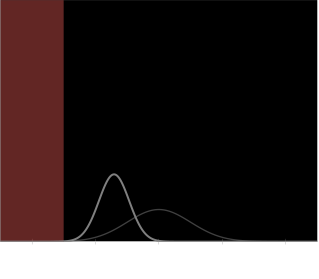
f(τ)≤0
Ideally, we minimize the cross entropy between the
new proposal distribution and p(τ∣f(τ)≤0).
new proposal distribution and p(τ∣f(τ)≤0).
…but the weights might all be zero!
REPEAT!
Cross Entropy Method
At each iteration
1
Draw samples from the current proposal.
2
Compute f(τ) for each sample and pick
the top melite samples.
the top melite samples.
3
Select the threshold γ to be the highest
f(τ) of the elite samples.
f(τ) of the elite samples.
4
Compute the next proposal by minimizing
the cross entropy with p(τ∣f(τ)≤γ).
the cross entropy with p(τ∣f(τ)≤γ).
f(τ)≤0
Ideally, we minimize the cross entropy between the
new proposal distribution and p(τ∣f(τ)≤0).
new proposal distribution and p(τ∣f(τ)≤0).
…but the weights might all be zero!
REPEAT!
Cross Entropy Method
At each iteration
1
Draw samples from the current proposal.
2
Compute f(τ) for each sample and pick
the top melite samples.
the top melite samples.
3
Select the threshold γ to be the highest
f(τ) of the elite samples.
f(τ) of the elite samples.
4
Compute the next proposal by minimizing
the cross entropy with p(τ∣f(τ)≤γ).
the cross entropy with p(τ∣f(τ)≤γ).
f(τ)≤0
Ideally, we minimize the cross entropy between the
new proposal distribution and p(τ∣f(τ)≤0).
new proposal distribution and p(τ∣f(τ)≤0).
…but the weights might all be zero!
REPEAT!
Cross Entropy Method
At each iteration
1
Draw samples from the current proposal.
2
Compute f(τ) for each sample and pick
the top melite samples.
the top melite samples.
3
Select the threshold γ to be the highest
f(τ) of the elite samples.
f(τ) of the elite samples.
4
Compute the next proposal by minimizing
the cross entropy with p(τ∣f(τ)≤γ).
the cross entropy with p(τ∣f(τ)≤γ).
f(τ)≤0
Ideally, we minimize the cross entropy between the
new proposal distribution and p(τ∣f(τ)≤0).
new proposal distribution and p(τ∣f(τ)≤0).
…but the weights might all be zero!
REPEAT!
Cross Entropy Method
At each iteration
1
Draw samples from the current proposal.
2
Compute f(τ) for each sample and pick
the top melite samples.
the top melite samples.
3
Select the threshold γ to be the highest
f(τ) of the elite samples.
f(τ) of the elite samples.
4
Compute the next proposal by minimizing
the cross entropy with p(τ∣f(τ)≤γ).
the cross entropy with p(τ∣f(τ)≤γ).
f(τ)≤0
Ideally, we minimize the cross entropy between the
new proposal distribution and p(τ∣f(τ)≤0).
new proposal distribution and p(τ∣f(τ)≤0).
…but the weights might all be zero!
REPEAT!
Cross Entropy Method
At each iteration
1
Draw samples from the current proposal.
2
Compute f(τ) for each sample and pick
the top melite samples.
the top melite samples.
3
Select the threshold γ to be the highest
f(τ) of the elite samples.
f(τ) of the elite samples.
4
Compute the next proposal by minimizing
the cross entropy with p(τ∣f(τ)≤γ).
the cross entropy with p(τ∣f(τ)≤γ).
f(τ)≤0
Ideally, we minimize the cross entropy between the
new proposal distribution and p(τ∣f(τ)≤0).
new proposal distribution and p(τ∣f(τ)≤0).
…but the weights might all be zero!
REPEAT!
Cross Entropy Method
At each iteration
1
Draw samples from the current proposal.
2
Compute f(τ) for each sample and pick
the top melite samples.
the top melite samples.
3
Select the threshold γ to be the highest
f(τ) of the elite samples.
f(τ) of the elite samples.
4
Compute the next proposal by minimizing
the cross entropy with p(τ∣f(τ)≤γ).
the cross entropy with p(τ∣f(τ)≤γ).
f(τ)≤0
Ideally, we minimize the cross entropy between the
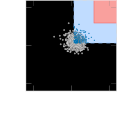
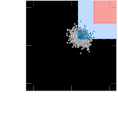
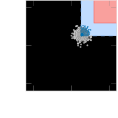
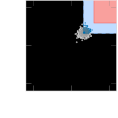
new proposal distribution and p(τ∣f(τ)≤0).
new proposal distribution and p(τ∣f(τ)≤0).
…but the weights might all be zero!
REPEAT!
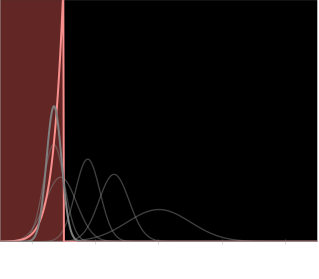
Perform importance sampling
with the final proposal.
with the final proposal.
Cross Entropy Method
At each iteration
1
Draw samples from the current proposal.
2
Compute f(τ) for each sample and pick
the top melite samples.
the top melite samples.
3
Select the threshold γ to be the highest
f(τ) of the elite samples.
f(τ) of the elite samples.
4
Compute the next proposal by minimizing
the cross entropy with p(τ∣f(τ)≤γ).
the cross entropy with p(τ∣f(τ)≤γ).
Ideally, we minimize the cross entropy between the
new proposal distribution and p(τ∣f(τ)≤0).
new proposal distribution and p(τ∣f(τ)≤0).
…but the weights might all be zero!
REPEAT!
Perform importance sampling
with the final proposal.
with the final proposal.
Cross Entropy Method


Plan for Today
Part 1
Part 2
Part 3
1
Direct Estimation
2
Importance Sampling
3
Cross Entropy Method (Adaptive Importance Sampling)
4
Multiple Importance Sampling
5
Population Monte Carlo
6
Sequential Monte Carlo
7
Ratio of Normalizing Constants
8
Self-Normalized Importance Sampling
9
Bridge Sampling
10
Multilevel Splitting
In regular importance sampling, we have to pick a proposal distribution!

Multiple Importance Sampling
Why pick just one proposal distribution when you can have many?
*perfect for indecisive people like me!
Multiple Importance Sampling
1
Draw samples from the current proposals.
τi∼qi(τ)
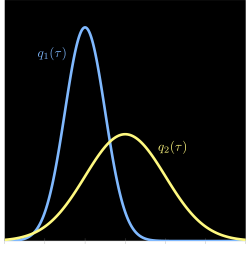
2
Use the samples to estimate pfail.
p^fail=m1i=1∑mwi1{τi∈/ψ}
where
wi=qi(τi)p(τi)
wi=qi(τi)p(τi)
Standard Multiple Importance Sampling (s-MIS)
There is another option…
Multiple Importance Sampling
There is another option…
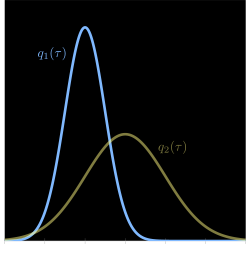
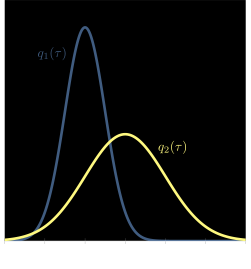
wi=qi(τi)p(τi)
Standard Multiple Importance Sampling (s-MIS)
Deterministic Mixture Multiple Importance Sampling (DM-MIS)
Multiple Importance Sampling
There is another option…
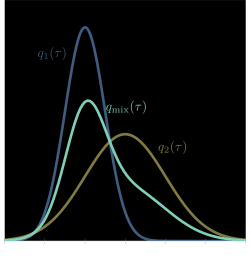
wi=qi(τi)p(τi)
wi=m1∑j=1mqj(τi)p(τi)
Standard Multiple Importance Sampling (s-MIS)
Deterministic Mixture Multiple Importance Sampling (DM-MIS)
Multiple Importance Sampling
1
Draw samples from the current proposals.
τi∼qi(τ)
2
Use the samples to estimate pfail.
p^fail=m1i=1∑mwi1{τi∈/ψ}
where
wi=qi(τi)p(τi)
Standard Multiple
Importance Sampling (s-MIS)
Importance Sampling (s-MIS)
or
wi=m1∑j=1mqj(τi)p(τi)
Deterministic Mixture Multiple
Importance Sampling (DM-MIS)
Importance Sampling (DM-MIS)
*DM-MIS has been shown to have lower variance.
Multiple Importance Sampling

Multiple Importance Sampling
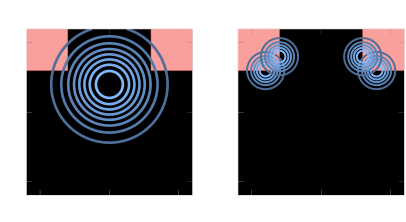
Multiple Importance Sampling
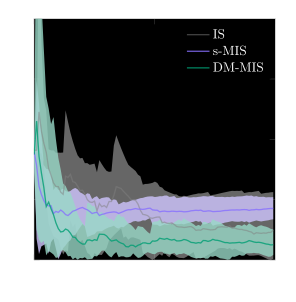
Plan for Today
Part 1
Part 2
Part 3
1
Direct Estimation
2
Importance Sampling
3
Cross Entropy Method (Adaptive Importance Sampling)
4
Multiple Importance Sampling
5
Population Monte Carlo
6
Sequential Monte Carlo
7
Ratio of Normalizing Constants
8
Self-Normalized Importance Sampling
9
Bridge Sampling
10
Multilevel Splitting
Population Monte Carlo
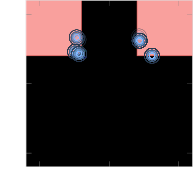
Let’s adapt a whole population of proposal distributions!
Population Monte Carlo
Let’s adapt a whole population of proposal distributions!
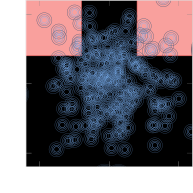
Population Monte Carlo
Let’s adapt a whole population of proposal distributions!
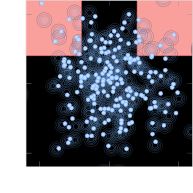
Population Monte Carlo
Let’s adapt a whole population of proposal distributions!
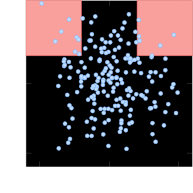
Population Monte Carlo
Let’s adapt a whole population of proposal distributions!
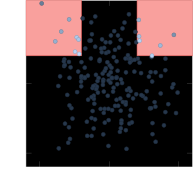
Population Monte Carlo
Let’s adapt a whole population of proposal distributions!
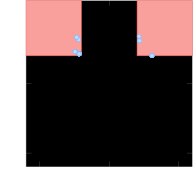
Population Monte Carlo
Let’s adapt a whole population of proposal distributions!
Population Monte Carlo
Let’s adapt a whole population of proposal distributions!
Population Monte Carlo
Let’s adapt a whole population of proposal distributions!
1
Select an initial population of proposals spread
out over the space of possible trajectories.
out over the space of possible trajectories.
Note: it is important for the
initial population of proposals
to cover the space of possibilities
as best as possible.
initial population of proposals
to cover the space of possibilities
as best as possible.
Population Monte Carlo
Let’s adapt a whole population of proposal distributions!
1
Select an initial population of proposals spread
out over the space of possible trajectories.
out over the space of possible trajectories.
2
Draw a sample from each proposal.
Population Monte Carlo
Let’s adapt a whole population of proposal distributions!
1
Select an initial population of proposals spread
out over the space of possible trajectories.
out over the space of possible trajectories.
2
Draw a sample from each proposal.
3
Compute the importance weight for each sample.
Population Monte Carlo
Let’s adapt a whole population of proposal distributions!
1
Select an initial population of proposals spread
out over the space of possible trajectories.
out over the space of possible trajectories.
2
Draw a sample from each proposal.
3
Compute the importance weight for each sample.
4
Resample based on the importance weights.
Population Monte Carlo
Let’s adapt a whole population of proposal distributions!
1
Select an initial population of proposals spread
out over the space of possible trajectories.
out over the space of possible trajectories.
2
Draw a sample from each proposal.
3
Compute the importance weight for each sample.
4
Resample based on the importance weights.
5
Create new proposal distributions
centered at the samples.
centered at the samples.
Population Monte Carlo
Let’s adapt a whole population of proposal distributions!
1
Select an initial population of proposals spread
out over the space of possible trajectories.
out over the space of possible trajectories.
2
Draw a sample from each proposal.
3
Compute the importance weight for each sample.
4
Resample based on the importance weights.
5
Create new proposal distributions
centered at the samples.
centered at the samples.
REPEAT!
Perform multiple importance
sampling with the final
proposals.
sampling with the final
proposals.
Plan for Today
Part 1
Part 2
Part 3
1
Direct Estimation
2
Importance Sampling
3
Cross Entropy Method (Adaptive Importance Sampling)
4
Multiple Importance Sampling
5
Population Monte Carlo
6
Sequential Monte Carlo
7
Ratio of Normalizing Constants
8
Self-Normalized Importance Sampling
9
Bridge Sampling
10
Multilevel Splitting
Sequential Monte Carlo
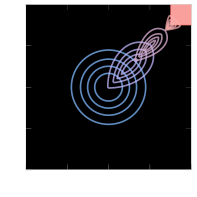
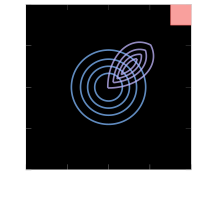
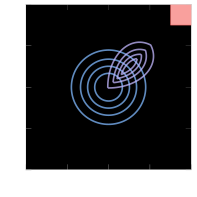
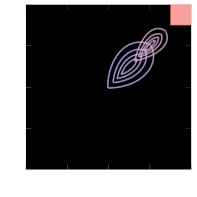
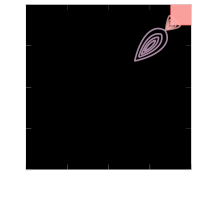
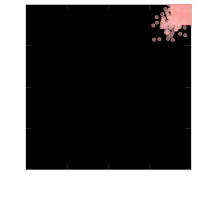
We want to move samples from the nominal distribution to the failure distribution.

Sequential Monte Carlo
We want to move samples from the nominal distribution to the failure distribution.
It turns out we can estimate the probability of failure based on the path that the samples take.
Sequential Monte Carlo
We want to move samples from the nominal distribution to the failure distribution.
We typically move the samples through a series of intermediate distributions.
How can we get these intermediate distributions? SMOOTHING!
Sequential Monte Carlo
Smoothing ϵ1.00
Sequential Monte Carlo
We want to move samples from the nominal distribution to the failure distribution.
We typically move the samples through a series of intermediate distributions.
How can we get these intermediate distributions? SMOOTHING!
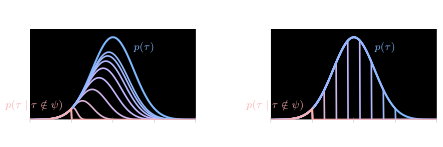
We can also use the thresholding technique similar to
what we did for the cross entropy method.
what we did for the cross entropy method.
Sequential Monte Carlo
We want to move samples from the nominal distribution to the failure distribution.
We typically move the samples through a series of intermediate distributions.
How can we get these intermediate distributions? SMOOTHING!
We can also use the thresholding technique similar to
what we did for the cross entropy method.
what we did for the cross entropy method.
How do we move samples from one distribution to the next? MCMC!
Sequential Monte Carlo
Sequential Monte Carlo
Sequential Monte Carlo
Sequential Monte Carlo
Sequential Monte Carlo
Sequential Monte Carlo
Sequential Monte Carlo

Sequential Monte Carlo
🤔Okay but how do we estimate the probability of failure from all this?
g1
g2
g3
g4
g5
Sequential Monte Carlo
🤔Okay but how do we estimate the probability of failure from all this?
g1
g2
g3
g4
g5
Keep track of a weight for each sample:
wi(ℓ)=wi(ℓ−1)gˉℓ(τi(ℓ))gˉℓ+1(τi(ℓ))
Average the weights at the final iteration:
p^fail=m1i=1∑mwi(n−1)
p^fail=m1i=1∑mwi(n−1)
Sequential Monte Carlo
A few other notes on SMC:
It is common to also do a resampling step similar to population Monte Carlo for each transition.
Example 7.6
This process may allow us to perform fewer MCMC steps.SMC is nonparametric, we do everything with samples.
This feature allows it to perform well for complex, multimodal failure distributions.Sequential Monte Carlo
SMC is nonparametric, we do everything with samples.
This feature allows it to perform well for complex, multimodal failure distributions.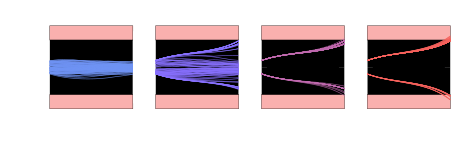
Plan for Today
Part 1
Part 2
Part 3
1
Direct Estimation
2
Importance Sampling
3
Cross Entropy Method (Adaptive Importance Sampling)
4
Multiple Importance Sampling
5
Population Monte Carlo
6
Sequential Monte Carlo
7
Ratio of Normalizing Constants
8
Self-Normalized Importance Sampling
9
Bridge Sampling
10
Multilevel Splitting
Ratio of Normalizing Constants
It turns out that importance sampling is a special case of a more general problem of determining
the ratio of the normalizing constants of two distributions.
the ratio of the normalizing constants of two distributions.
Ratio of Normalizing Constants
It turns out that importance sampling is a special case of a more general problem of determining
the ratio of the normalizing constants of two distributions.
the ratio of the normalizing constants of two distributions.
g1(τ)=∫gˉ1(τ)dτgˉ1(τ)=z1gˉ1(τ)
g2(τ)=∫gˉ2(τ)dτgˉ2(τ)=z2gˉ2(τ)
g1(τ)=∫gˉ1(τ)dτgˉ1(τ)=z1gˉ1(τ)
g2(τ)=∫gˉ2(τ)dτgˉ2(τ)=z2gˉ2(τ)
Imagine someone just came up to you and was like…

I will give you a million dollars 💰
if you can get me an accurate
estimate of z1/z2 using only
samples from g2.
if you can get me an accurate
estimate of z1/z2 using only
samples from g2.
g1(τ)=∫gˉ1(τ)dτgˉ1(τ)=z1gˉ1(τ)
g2(τ)=∫gˉ2(τ)dτgˉ2(τ)=z2gˉ2(τ)
I will give you a million dollars 💰
if you can get me an accurate
estimate of z1/z2 using only
samples from g2.
if you can get me an accurate
estimate of z1/z2 using only
samples from g2.
g1(τ)=∫gˉ1(τ)dτgˉ1(τ)=z1gˉ1(τ)
g2(τ)=∫gˉ2(τ)dτgˉ2(τ)=z2gˉ2(τ)
I will give you a million dollars 💰
if you can get me an accurate
estimate of z1/z2 using only
samples from g2.
if you can get me an accurate
estimate of z1/z2 using only
samples from g2.

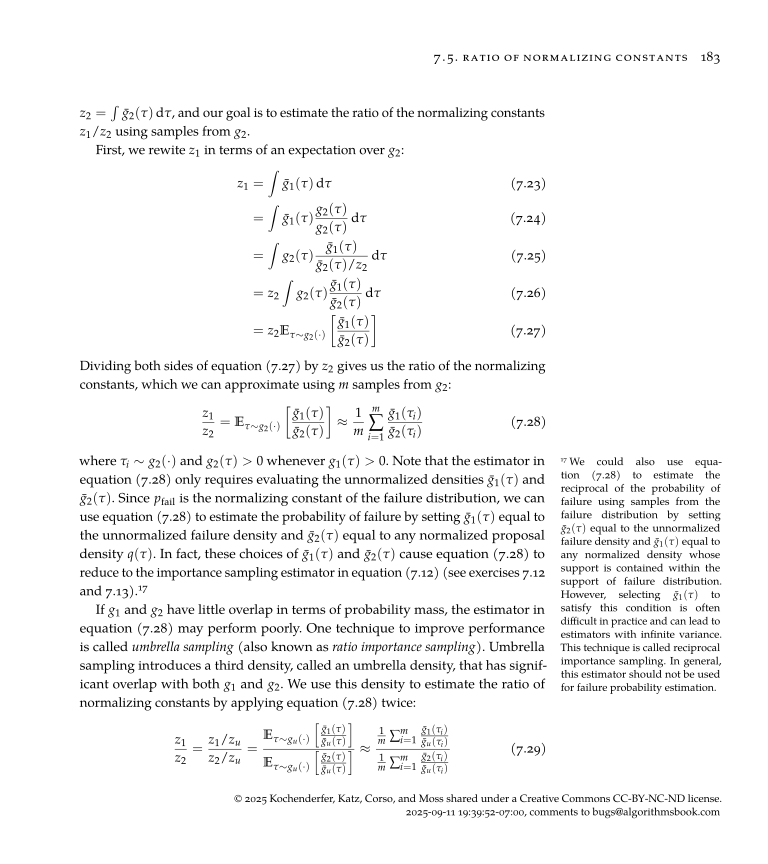
z2z1=Eτ∼g2(⋅)[gˉ2(τ)gˉ1(τ)]≈m1i=1∑mgˉ2(τ)gˉ1(τ)
I will give you a million dollars 💰
if you can get me an accurate
estimate of z1/z2 using only
samples from g2.
if you can get me an accurate
estimate of z1/z2 using only
samples from g2.
z2z1=Eτ∼g2(⋅)[gˉ2(τ)gˉ1(τ)]≈m1i=1∑mgˉ2(τ)gˉ1(τ)
Sadly 😕, this scenario is probably
never going to happen to you.
never going to happen to you.
So let’s get back to failure probability estimation…
Can we derive the importance sampling estimator from this?
z2z1=Eτ∼g2(⋅)[gˉ2(τ)gˉ1(τ)]≈m1i=1∑mgˉ2(τ)gˉ1(τ)
Quick aside: don’t do the opposite (i.e. estimate 1/pfail)
g1(τ)=∫gˉ1(τ)dτgˉ1(τ)=z1gˉ1(τ)
g2(τ)=∫gˉ2(τ)dτgˉ2(τ)=z2gˉ2(τ)
What might be a problem with estimating this ratio using samples from g2?
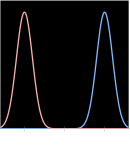
It doesn’t work so great if g1 and g2 have very little overlap.
The solution?
g1(τ)=∫gˉ1(τ)dτgˉ1(τ)=z1gˉ1(τ)
g2(τ)=∫gˉ2(τ)dτgˉ2(τ)=z2gˉ2(τ)
What might be a problem with estimating this ratio using samples from g2?
It doesn’t work so great if g1 and g2 have very little overlap.
The solution?
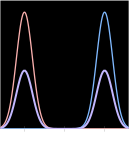
g1(τ)=∫gˉ1(τ)dτgˉ1(τ)=z1gˉ1(τ)
g2(τ)=∫gˉ2(τ)dτgˉ2(τ)=z2gˉ2(τ)
The solution?
Use an umbrella!☔
gˉu(τ)
The solution?
Use an umbrella!☔
gˉu(τ)
g1(τ)
g2(τ)
zβzα≈m1i=1∑mgˉβ(τ)gˉα(τ)
Using samples from gβ
The solution?
Use an umbrella!☔
z2z1≈m1∑i=1mgˉu(τ)gˉ2(τ)m1∑i=1mgˉu(τ)gˉ1(τ)
Using samples from gu.
🤔What’s the optimal umbrella density?
gˉu∗(τ)∝gˉ1(τ)−z2z1gˉ2(τ)
The solution?
Use an umbrella!☔
z2z1≈m1∑i=1mgˉu(τ)gˉ2(τ)m1∑i=1mgˉu(τ)gˉ1(τ)
Using samples from gu.
🤔What’s the optimal umbrella density?
gˉu∗(τ)∝gˉ1(τ)−z2z1gˉ2(τ)
🤔…but it is written in terms of the
thing we want to estimate (z1/z2).
thing we want to estimate (z1/z2).

The solution?
Use an umbrella!☔
z2z1≈m1∑i=1mgˉu(τ)gˉ2(τ)m1∑i=1mgˉu(τ)gˉ1(τ)
Using samples from gu.
🤔What’s the optimal umbrella density?
gˉu∗(τ)∝gˉ1(τ)−z2z1gˉ2(τ)
🤔…but it is written in terms of the
thing we want to estimate (z1/z2).
thing we want to estimate (z1/z2).
In practice, we just try to get as close as possible.
In practice, we just try to get as close as possible.
A good umbrella distribution should cover regions of high likelihood in both distributions.
gˉ1(τ)
gˉ2(τ)
gˉu(τ)
Plan for Today
Part 1
Part 2
Part 3
1
Direct Estimation
2
Importance Sampling
3
Cross Entropy Method (Adaptive Importance Sampling)
4
Multiple Importance Sampling
5
Population Monte Carlo
6
Sequential Monte Carlo
7
Ratio of Normalizing Constants
8
Self-Normalized Importance Sampling
9
Bridge Sampling
10
Multilevel Splitting
z2z1≈m1∑i=1mgˉu(τ)gˉ2(τ)m1∑i=1mgˉu(τ)gˉ1(τ)
Using samples from gu.
But what are we even doing with all of this ☔?
Turns out we can use it to estimate the probability of failure
using samples from an unnormalized proposal!
using samples from an unnormalized proposal!
unnormalized failure
distribution
distribution
nominal trajectory
distribution
distribution
unnormalized proposal
density
density
gˉ1(τ)=p(τ)1{τ∈/ψ}
gˉ2(τ)=p(τ)
gˉu(τ)=qˉ(τ)
Turns out we can use it to estimate the probability of failure
using samples from an unnormalized proposal!
using samples from an unnormalized proposal!
unnormalized failure
distribution
distribution
nominal trajectory
distribution
distribution
unnormalized proposal
density
density
gˉ1(τ)=p(τ)1{τ∈/ψ}
gˉ2(τ)=p(τ)
gˉu(τ)=qˉ(τ)
This process results in the self-normalized importance
sampling (self-IS) estimator:
sampling (self-IS) estimator:
pfail≈m1∑i=1mwim1∑i=1mwi1{τi∈/ψ}
This process results in the self-normalized importance
sampling (self-IS) estimator:
sampling (self-IS) estimator:
pfail≈m1∑i=1mwim1∑i=1mwi1{τi∈/ψ}
pfail≈m1i=1∑mwi1{τi∈/ψ}
It is kinda like regular importance sampling — we just normalize the weights by their sum.
This process results in the self-normalized importance
sampling (self-IS) estimator:
sampling (self-IS) estimator:
pfail≈m1∑i=1mwim1∑i=1mwi1{τi∈/ψ}
It is kinda like regular importance sampling — we just normalize the weights by their sum.
HOWEVER, the optimal proposal is very different…
gˉ1(τ)=p(τ)1{τ∈/ψ}
gˉ2(τ)=p(τ)
gˉu∗(τ)∝gˉ1(τ)−z2z1gˉ2(τ)
This process results in the self-normalized importance
sampling (self-IS) estimator:
sampling (self-IS) estimator:
pfail≈m1∑i=1mwim1∑i=1mwi1{τi∈/ψ}
It is kinda like regular importance sampling — we just normalize the weights by their sum.
HOWEVER, the optimal proposal is very different…
q∗(τ)∝p(τ)∣1{τ∈/ψ}−pfail∣
This process results in the self-normalized importance
sampling (self-IS) estimator:
sampling (self-IS) estimator:
pfail≈m1∑i=1mwim1∑i=1mwi1{τi∈/ψ}
It is kinda like regular importance sampling — we just normalize the weights by their sum.
HOWEVER, the optimal proposal is very different…
q∗(τ)∝p(τ)∣1{τ∈/ψ}−pfail∣
It should result in half the samples coming from the failure distribution and half from the success distribution.

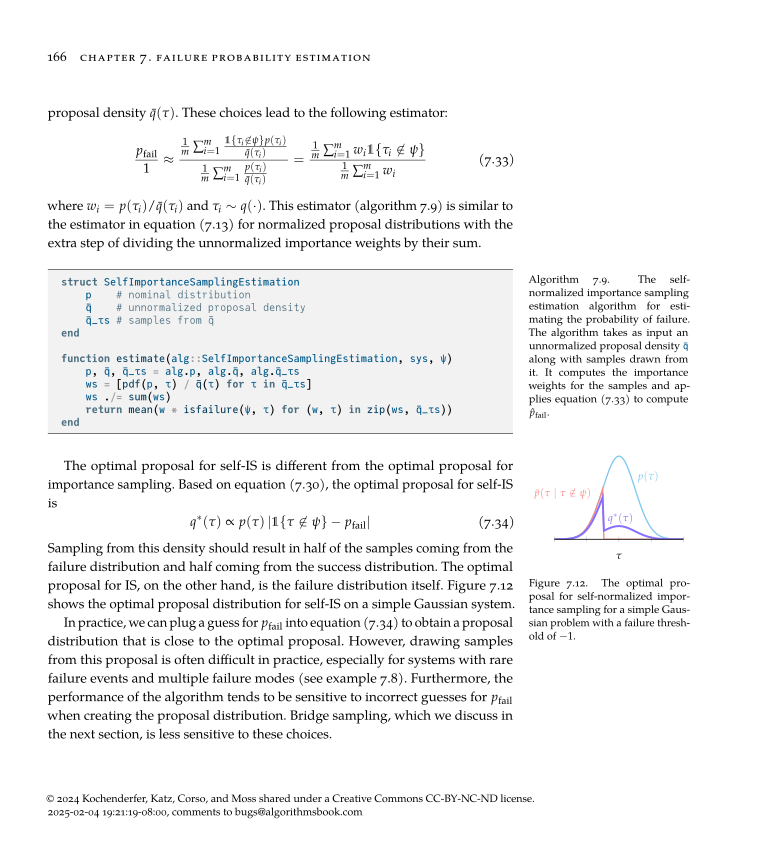
This process results in the self-normalized importance
sampling (self-IS) estimator:
sampling (self-IS) estimator:
pfail≈m1∑i=1mwim1∑i=1mwi1{τi∈/ψ}
It is kinda like regular importance sampling — we just normalize the weights by their sum.
HOWEVER, the optimal proposal is very different…
q∗(τ)∝p(τ)∣1{τ∈/ψ}−pfail∣
It should result in half the samples coming from the failure distribution and half from the success distribution.

It can be tough to sample from this proposal though…
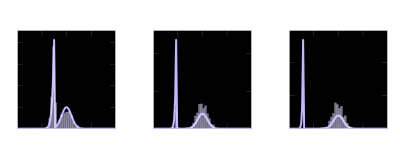
This process results in the self-normalized importance
sampling (self-IS) estimator:
sampling (self-IS) estimator:
pfail≈m1∑i=1mwim1∑i=1mwi1{τi∈/ψ}
It is kinda like regular importance sampling — we just normalize the weights by their sum.
HOWEVER, the optimal proposal is very different…
q∗(τ)∝p(τ)∣1{τ∈/ψ}−pfail∣
It should result in half the samples coming from the failure distribution and half from the success distribution.
It can be tough to sample from this proposal though…
Plan for Today
Part 1
Part 2
Part 3
1
Direct Estimation
2
Importance Sampling
3
Cross Entropy Method (Adaptive Importance Sampling)
4
Multiple Importance Sampling
5
Population Monte Carlo
6
Sequential Monte Carlo
7
Ratio of Normalizing Constants
8
Self-Normalized Importance Sampling
9
Bridge Sampling
10
Multilevel Splitting
Umbrella Sampling
Bridge Sampling
gˉ1(τ)
gˉ2(τ)
gˉu(τ)
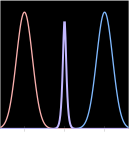
gˉ1(τ)
gˉ2(τ)
gˉb(τ)
zβzα≈m1i=1∑mgˉβ(τ)gˉα(τ)
Using samples from gβ
Bridge Sampling
gˉ1(τ)
gˉ2(τ)
gˉb(τ)
Bridge Sampling
z2z1≈m11∑i=1m1gˉ1(τ)gˉb(τ)m21∑i=1m2gˉ2(τ)gˉb(τ)
Using samples from g1 and g2.
🤔What’s the optimal bridge density?
gˉb∗(τ)∝m1gˉ1(τ)+m2z2z1gˉ2(τ)gˉ1(τ)gˉ2(τ)
Bridge Sampling
z2z1≈m11∑i=1m1gˉ1(τ)gˉb(τ)m21∑i=1m2gˉ2(τ)gˉb(τ)
Using samples from g1 and g2.
🤔What’s the optimal bridge density?
gˉb∗(τ)∝m1gˉ1(τ)+m2z2z1gˉ2(τ)gˉ1(τ)gˉ2(τ)
🤔…but it is written in terms of the
thing we want to estimate (z1/z2).
thing we want to estimate (z1/z2).
Bridge Sampling
z2z1≈m11∑i=1m1gˉ1(τ)gˉb(τ)m21∑i=1m2gˉ2(τ)gˉb(τ)
Using samples from g1 and g2.
🤔What’s the optimal bridge density?
gˉb∗(τ)∝m1gˉ1(τ)+m2z2z1gˉ2(τ)gˉ1(τ)gˉ2(τ)
🤔…but it is written in terms of the
thing we want to estimate (z1/z2).
thing we want to estimate (z1/z2).
In practice, we just try to get as close as possible.
In practice, we just try to get as close as possible.
A good bridge distribution should bridge the gap between both distributions.
gˉ1(τ)
gˉ2(τ)
gˉb(τ)
See algorithm 7.8 for a
technique to estimate
this density.
technique to estimate
this density.
Let’s get back to failure probability estimation again… what should we do now?
Let’s get back to failure probability estimation again… what should we do now?
unnormalized failure
distribution
distribution
nominal trajectory
distribution
distribution
unnormalized proposal
density
density
gˉ1(τ)=p(τ)1{τ∈/ψ}
gˉ2(τ)=p(τ)
gˉb(τ)=qˉ(τ)
Turns out this is a horrible plan!
It ends up being no better than direct estimation.
Example 7.9
Let’s do something even crazier!
Let’s do something even crazier!
z2z1≈m11∑i=1m1gˉ1(τ)gˉb(τ)m21∑i=1m2gˉ2(τ)gˉb(τ)
Using samples from g1 and g2.
Let’s do something even crazier!
z2z1≈m11∑i=1m1gˉ1(τ)gˉb(τ)m21∑i=1m2gˉ2(τ)gˉb(τ)
Using samples from g1 and g2.
pfail=zp(τ)zp(τ∣τ∈/ψ)=(zp(τ)z2)(z2z3)⋯(zL−1zp(τ∣τ∈/ψ))
Get a bunch of intermediate distributions and apply bridge sampling to them!

zp(τ)z2
zp(τ)z2
×z2z3
zp(τ)z2
×z2z3
×z3z4
zp(τ)z2
×z2z3
×z3z4
×z4zp(τ∣τ∈/ψ)
zp(τ)z2
×z2z3
×z3z4
×z4zp(τ∣τ∈/ψ)
=zp(τ)zp(τ∣τ∈/ψ)=1pfail=pfail
Bridge sampling through a sequence of intermediate distributions
Iteration0
Plan for Today
Part 1
Part 2
Part 3
1
Direct Estimation
2
Importance Sampling
3
Cross Entropy Method (Adaptive Importance Sampling)
4
Multiple Importance Sampling
5
Population Monte Carlo
6
Sequential Monte Carlo
7
Ratio of Normalizing Constants
8
Self-Normalized Importance Sampling
9
Bridge Sampling
10
Multilevel Splitting
Multilevel Splitting
1
Pick a notion of distance to failure f(τ) (e.g. robustness)
We will require that f(τ)≤0 for
failure trajectories such that
p(τ∣τ∈/ψ)=p(τ∣f(τ)≤0)
failure trajectories such that
p(τ∣τ∈/ψ)=p(τ∣f(τ)≤0)
2
Pick a series of thresholds γi for the distance to failure
ranging from ∞ to 0.
ranging from ∞ to 0.
Multilevel Splitting
1
Pick a notion of distance to failure f(τ) (e.g. robustness)
2
Pick a series of thresholds γi for the distance to failure
ranging from ∞ to 0.
ranging from ∞ to 0.
Multilevel Splitting
1
Pick a notion of distance to failure f(τ) (e.g. robustness)
2
Pick a series of thresholds γi for the distance to failure
ranging from ∞ to 0.
ranging from ∞ to 0.
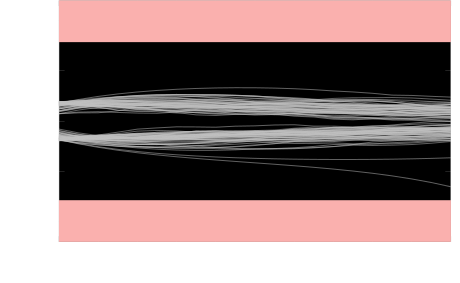
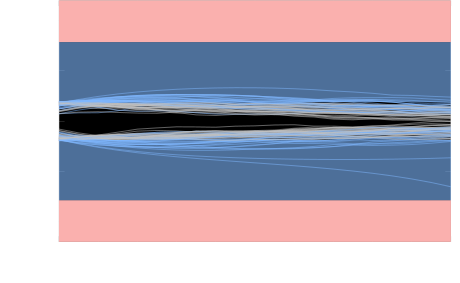
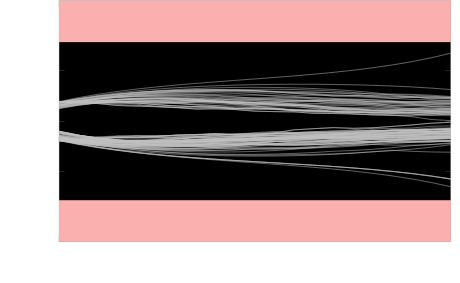
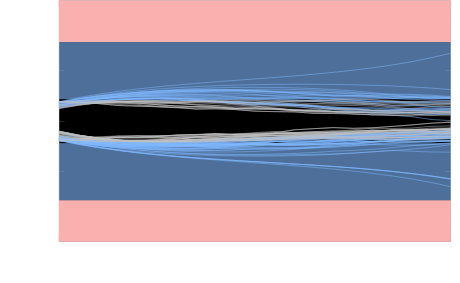
pfail=ℓ=2∏nP(f(τ)≤γℓ∣f(τ)≤γℓ−1)
If these probabilities are large enough, we
can estimate them using direct sampling!
can estimate them using direct sampling!
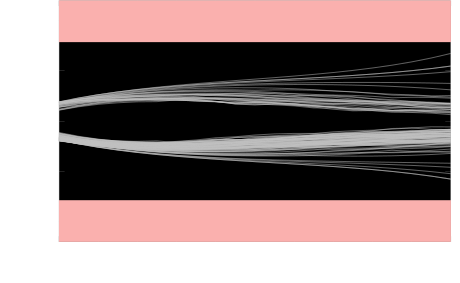
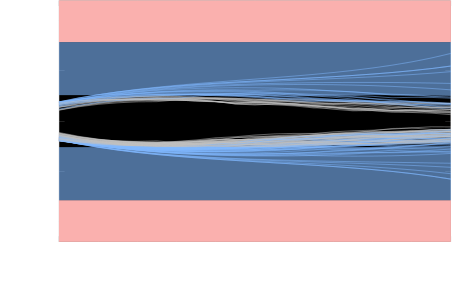
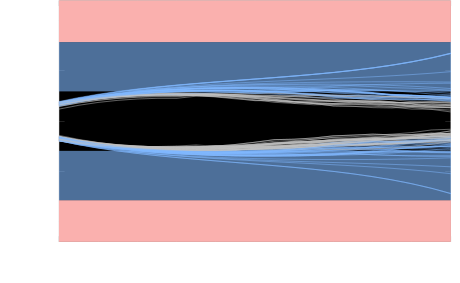
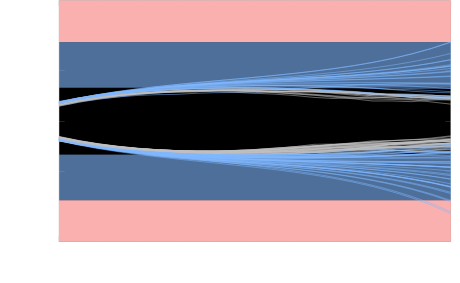
We can ensure that these probabilities are large enough by selecting them adaptively.
Multilevel Splitting
pfail=ℓ=2∏nP(f(τ)≤γℓ∣f(τ)≤γℓ−1)
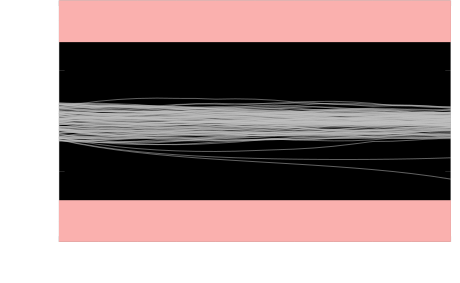
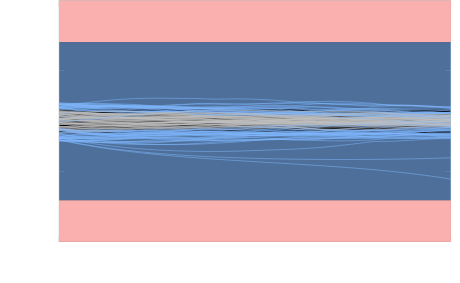
γ1=∞
γ2=0.67
p(f(τ)≤0.67∣f(τ)≤∞)=0.5
Multilevel Splitting
pfail=ℓ=2∏nP(f(τ)≤γℓ∣f(τ)≤γℓ−1)
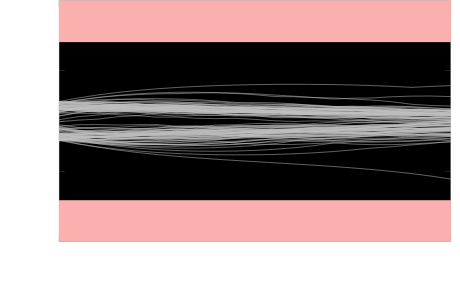
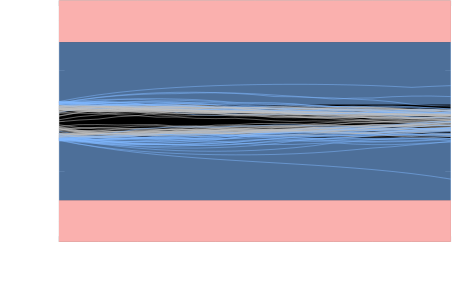
γ1=∞
γ2=0.67
γ3=0.62
p(f(τ)≤0.67∣f(τ)≤∞)
0.5
p(f(τ)≤0.62∣f(τ)≤0.67)=0.5
Multilevel Splitting
pfail=ℓ=2∏nP(f(τ)≤γℓ∣f(τ)≤γℓ−1)
γ1=∞
γ2=0.67
γ3=0.62
γ4=0.59
p(f(τ)≤0.67∣f(τ)≤∞)
0.5
p(f(τ)≤0.62∣f(τ)≤0.67)
0.5
p(f(τ)≤0.59∣f(τ)≤0.62)=0.5
Multilevel Splitting
pfail=ℓ=2∏nP(f(τ)≤γℓ∣f(τ)≤γℓ−1)
γ1=∞
γ2=0.67
γ3=0.62
γ4=0.59
γ5=0.56
p(f(τ)≤0.67∣f(τ)≤∞)
0.5
p(f(τ)≤0.62∣f(τ)≤0.67)
0.5
p(f(τ)≤0.59∣f(τ)≤0.62)
0.5
p(f(τ)≤0.56∣f(τ)≤0.59)=0.5
Multilevel Splitting
pfail=ℓ=2∏nP(f(τ)≤γℓ∣f(τ)≤γℓ−1)
γ1=∞
γ2=0.67
γ3=0.62
γ4=0.59
γ5=0.56
γ6=0.53
p(f(τ)≤0.67∣f(τ)≤∞)
0.5
p(f(τ)≤0.62∣f(τ)≤0.67)
0.5
p(f(τ)≤0.59∣f(τ)≤0.62)
0.5
p(f(τ)≤0.56∣f(τ)≤0.59)
0.5
p(f(τ)≤0.53∣f(τ)≤0.56)=0.5
Multilevel Splitting
pfail=ℓ=2∏nP(f(τ)≤γℓ∣f(τ)≤γℓ−1)
γ1=∞
γ2=0.67
γ3=0.62
γ4=0.59
γ5=0.56
γ6=0.53
p(f(τ)≤0.67∣f(τ)≤∞)
0.5
p(f(τ)≤0.62∣f(τ)≤0.67)
0.5
p(f(τ)≤0.59∣f(τ)≤0.62)
0.5
p(f(τ)≤0.56∣f(τ)≤0.59)
0.5
p(f(τ)≤0.53∣f(τ)≤0.56)
0.5
γ7=0.49
p(f(τ)≤0.49∣f(τ)≤0.53)
0.5
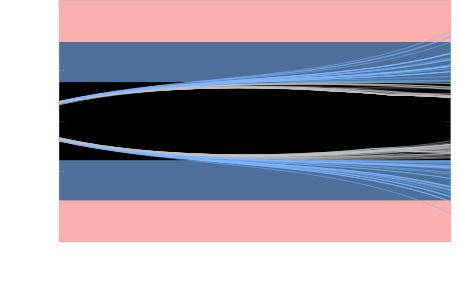
γ8=0.45
p(f(τ)≤0.45∣f(τ)≤0.49)
0.5
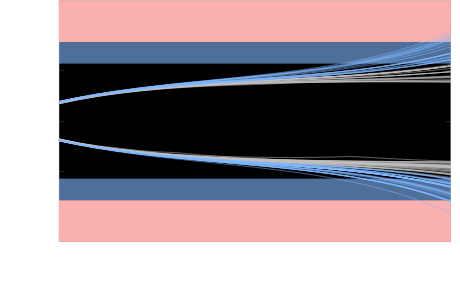
γ9=0.40
p(f(τ)≤0.40∣f(τ)≤0.45)
0.5
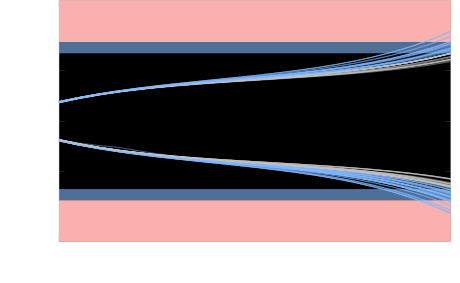
γ10=0.21
p(f(τ)≤0.21∣f(τ)≤0.40)
0.5
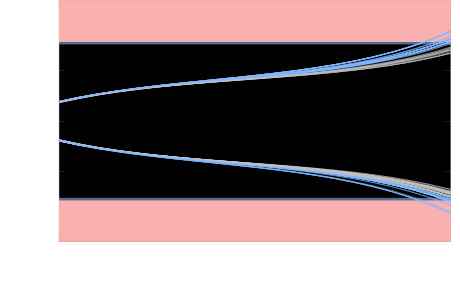
γ11=0.11
p(f(τ)≤0.11∣f(τ)≤0.21)
0.5
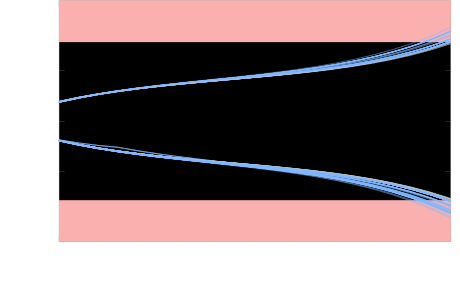
γ12=0.02
p(f(τ)≤0.02∣f(τ)≤0.11)
0.5
γ13=0.00
p(f(τ)≤0.0∣f(τ)≤0.02)=0.92
Multilevel Splitting
pfail=ℓ=2∏nP(f(τ)≤γℓ∣f(τ)≤γℓ−1)
γ1=∞
γ2=0.67
γ3=0.62
γ4=0.59
γ5=0.56
γ6=0.53
γ7=0.49
γ8=0.45
γ9=0.40
γ10=0.21
γ11=0.11
γ12=0.02
γ13=0.00
p(f(τ)≤0.67∣f(τ)≤∞)
0.5
p(f(τ)≤0.62∣f(τ)≤0.67)
0.5
p(f(τ)≤0.59∣f(τ)≤0.62)
0.5
p(f(τ)≤0.56∣f(τ)≤0.59)
0.5
p(f(τ)≤0.53∣f(τ)≤0.56)
0.5
p(f(τ)≤0.49∣f(τ)≤0.53)
0.5
p(f(τ)≤0.45∣f(τ)≤0.49)
0.5
p(f(τ)≤0.40∣f(τ)≤0.45)
0.5
p(f(τ)≤0.21∣f(τ)≤0.40)
0.5
p(f(τ)≤0.11∣f(τ)≤0.21)
0.5
p(f(τ)≤0.02∣f(τ)≤0.11)
0.5
p(f(τ)≤0.0∣f(τ)≤0.02)
0.92
×
×
×
×
×
×
×
×
×
×
×
p^fail=0.00046
Plan for Today
Part 1
Part 2
Part 3
1
Direct Estimation
2
Importance Sampling
3
Cross Entropy Method (Adaptive Importance Sampling)
4
Multiple Importance Sampling
5
Population Monte Carlo
6
Sequential Monte Carlo
7
Ratio of Normalizing Constants
8
Self-Normalized Importance Sampling
9
Bridge Sampling
10
Multilevel Splitting